TD: In your workshops, are the participants involved to assist with: mix, coat, expose, and wash their own prints. How does the physical, slow-paced labour of making a photograph transform a person’s emotional or intellectual connection to the theme of freedom?
JG: This depends on the process. With less toxic processes like Cyanotype that I worked with at the school, participants are involved in every stage of the process. This allowed them a way into the tactile nature of early photography.
With wet plate, I don’t mix all the chemicals due to their toxicity. I buy the collodion pre-prepared. However, participants see and discuss the coating, exposure and wash. The best part of this is the slow reveal of the image out of clouds in the fixer, people see the image revealing itself as the tones invert and unexposed silver dissolves into the hypo.
The main collaborative element of the process is during the exposure that can be up to 15 seconds long outdoors in daylight. This is a point where the participant has to fully commit to making the image. It is a mediative, still moment of communication between the person and the materials. My cameras don’t have a shutter, I remove the lens cap and count. This makes this a human, not mechanical part of the process.


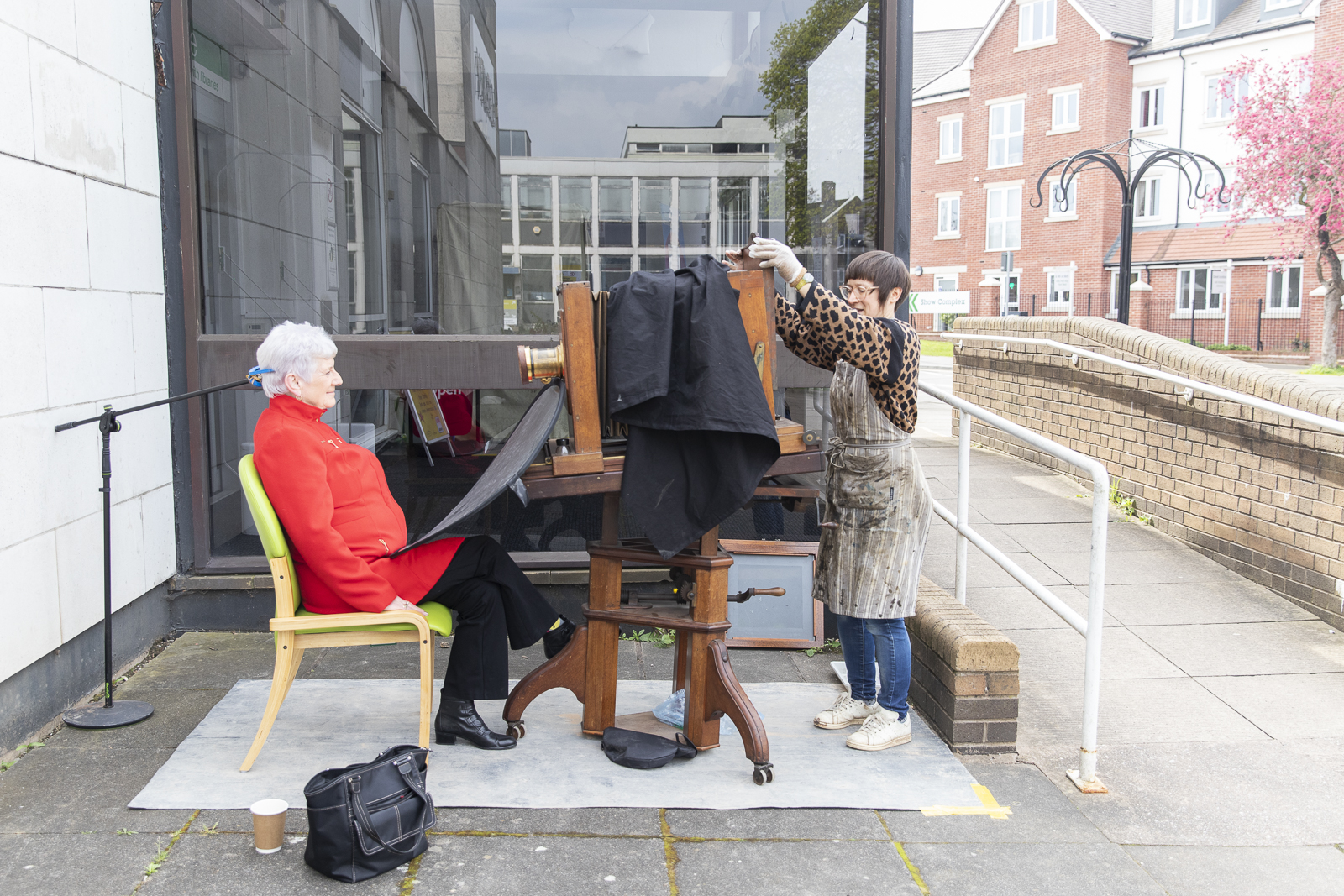
 Ron Gumbley and his family. Knowle Royal British Legion.


